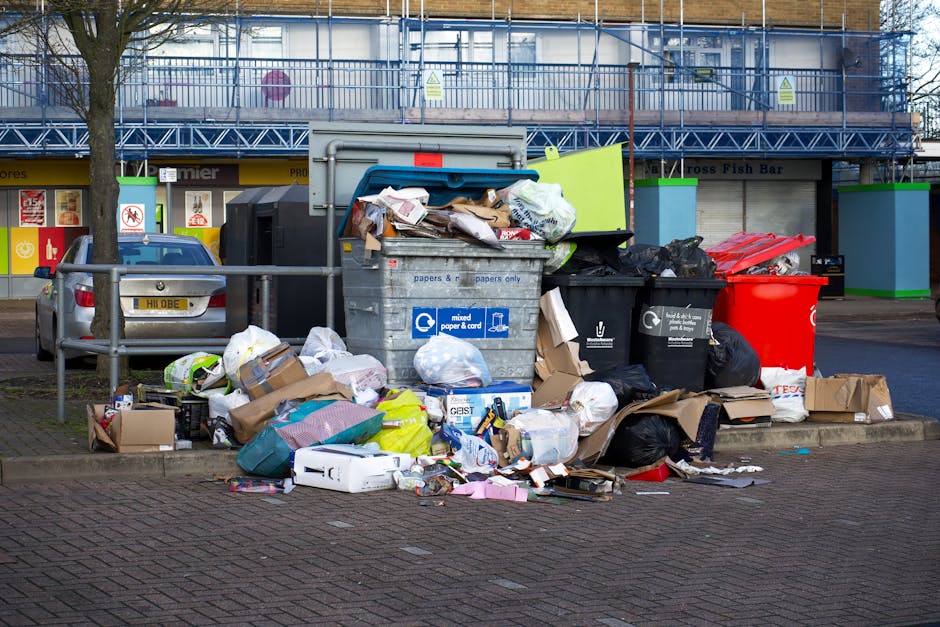
Tooting Broadway rubbish clearance for flats on High Street
Posted on 27/07/2026

Tooting Broadway rubbish clearance for flats on High Street: a practical local guide
If you live in a flat on High Street and the bin room is starting to look like a small mountain, you are not alone. Tooting Broadway rubbish clearance for flats on High Street is one of those jobs that sounds simple until you are carrying furniture down narrow stairs, trying not to block a communal hallway, and wondering what on earth to do with a broken chest of drawers. Truth be told, it is rarely just "throw it out". It needs planning, the right lifting approach, and a disposal route that fits flat living.
This guide explains how rubbish clearance works in a busy Tooting Broadway setting, what makes flats different, how to avoid common mistakes, and how to choose a service that is safe, tidy, and actually helpful. If you are comparing options, you may also want to look at the wider services overview and the company's pricing and quotes information before booking anything. A little preparation goes a long way here.
Key takeaway: flat clearance on High Street is easiest when access, lifting, timing, and recycling are planned together rather than treated as separate problems. That sounds obvious. In practice, it is the part people miss.
Why Tooting Broadway rubbish clearance for flats on High Street Matters
High Street flats in Tooting Broadway bring together all the things that make rubbish clearance awkward: shared entrances, limited parking, busy pavements, and neighbours who would quite like the corridor to remain a corridor. If you have ever tried to move a bulky wardrobe past a pram, a bike, and two shopping bags in the same hallway, you will understand the problem instantly.
Rubbish clearance matters here because the wrong approach can create avoidable friction. A pile of waste left in a communal area can become a safety hazard, block access, attract complaints, and slow the whole process down. In a flat, even a small job can have outsized consequences if it is not handled neatly.
It also matters because flats often produce mixed waste. One room might contain cardboard and soft furnishings, another may have a broken washing machine, and another may just have the usual "I will sort that later" clutter from behind a cupboard. That mix needs proper sorting so recyclable material does not get tangled up with general waste unnecessarily.
From a practical point of view, local clearance is about convenience too. Tooting Broadway is a busy part of south London, and time matters. If a team knows how to work around tight access, stairs, resident parking, and the realities of a high-traffic street, the job tends to feel calmer and faster. Less noise, less mess, less faff.
There is another angle, too: trust. In shared buildings, people care where waste goes. A service with proper handling, insurance, and compliance standards gives you confidence that the rubbish has not simply been shifted from one problem to another. That reassurance is not fluff; it is part of the service.
How Tooting Broadway rubbish clearance for flats on High Street Works
Most flat clearances follow a straightforward pattern, but the details change depending on access. A good clearance starts with understanding what needs removing, where it is located, and how it will leave the building. Sounds basic, but this is where the job succeeds or becomes a headache.
The first step is usually a quick review of the items. Are you clearing a few bulky pieces, a full flat, builder's leftovers, or just household waste built up over time? Different loads need different handling. For example, old sofas and wardrobes are a furniture removal job, while a flat renovation may need builders waste removal in Tooting. A fridge, freezer, or washing machine should be treated as appliance disposal rather than ordinary rubbish, so it is worth checking the right route for white goods and appliance disposal.
Next comes access planning. On High Street, that may mean working around narrow stairwells, intercom entry, lift restrictions, concierge rules, or no-parking windows. It can also mean protecting floors and corners, because flats often have tighter hallways than people remember until move-out day. A careful team will think about how to remove items without scuffing walls or leaving a mess behind.
Then there is sorting. Reusable furniture, recyclable materials, electricals, and general household waste should not all be treated as one pile. Responsible clearance usually separates items where possible. That is better for the environment and, frankly, better for the building's sanity too.
Finally comes transport and disposal. Waste should be taken by a properly licensed carrier and processed through legitimate disposal or recycling routes. If you want to understand how that side works, the company's waste carrier licence and compliance page is a useful place to start. For a broader sense of the team behind the work, about us gives a bit more context.
Key Benefits and Practical Advantages
The main benefit is obvious: you get the space back. But the real value of organised flat clearance is bigger than that. It saves time, reduces stress, and prevents the sort of last-minute scramble that usually happens when a flat is being sold, let, renovated, or handed back to a landlord. Everyone knows that feeling when the deadline is close and the flat suddenly looks twice as cluttered as it did yesterday.
Some practical advantages worth noting:
- Less disruption to neighbours: efficient lifting and planned timing reduce hallway congestion and noise.
- Safer movement of bulky items: professional handling helps avoid knocks, trips, and strained backs.
- Better recycling outcomes: separation of usable materials often keeps more out of general waste.
- Faster turnover: especially helpful for tenancy changeovers or pre-sale preparation.
- Less decision fatigue: clear guidance makes it easier to know what stays, what goes, and what needs special handling.
There is also a peace-of-mind factor that people often underestimate. A tidy clearance can make a flat feel properly finished, not just emptied. That matters when you are preparing photos for a listing, settling a probate matter, or trying to get a refurb moving without delay. It is a bit like clearing your desk before a big Monday morning, except more physical and with more bin bags.
If sustainability is important to you, look for a provider that explains its recycling and reuse approach. The recycling and sustainability information is a good indicator of how seriously a company treats diversion from landfill and material recovery.
Who This Is For and When It Makes Sense
This service is for anyone dealing with waste in a flat where access is awkward, the item mix is broad, or speed matters. In other words, a lot of people in Tooting Broadway. Flats on High Street often attract renters, first-time buyers, landlords, sharers, and long-term residents all at once, so the reasons for clearance vary quite a bit.
You may need rubbish clearance if you are:
- moving out of a flat and need everything gone quickly
- preparing a property for new tenants
- clearing old furniture after a flat share ends
- dealing with renovation debris
- emptying a flat after a family change or probate situation
- replacing bulky items like sofas, wardrobes, or appliances
- simply reclaiming storage space that has become a bit embarrassing, if we are honest
It also makes sense when you do not have the vehicle, time, or physical help to take items away yourself. A van hire might seem cheaper at first, but once you factor in parking, lifting, loading, disposal, and the time lost, the picture changes. Often, the cheapest option on paper is not the least stressful option in real life.
For landlords and letting agents, clearance is often about speed and consistency. For homeowners, it is usually about getting a property into decent shape for sale or occupation. The local reading on selling homes in Tooting can be useful if clearance is part of a prep-to-market process.
Step-by-Step Guidance
If you are planning a clearance from a flat on High Street, a simple process usually works best. No need to overcomplicate it, but do give it enough structure that nothing gets missed.
- List the items by type. Separate furniture, appliances, bagged rubbish, recycling, and anything hazardous or delicate. A rough list is better than none at all.
- Check access carefully. Measure stair turns, note lift dimensions, confirm entry arrangements, and identify any parking restrictions. These little details can save a lot of bother.
- Decide what is reusable. If something still has life left in it, say so. Reuse is usually preferable to disposal where practical.
- Ask about special items. White goods, mattresses, and building debris may need particular handling. Do not assume everything is treated the same.
- Arrange a sensible time slot. In a busy street, quieter periods are often easier for residents and carriers alike.
- Clear walkways first. Make sure hallways, landings, and doorways are accessible before the team arrives. It sounds small, but it changes everything.
- Review the final sweep. Once the load is removed, check corners, cupboards, and behind doors. People always miss one thing. Always.
If you are collecting more than household clutter, it may be worth pairing clearance with a specific service. For instance, mixed domestic items fit well with domestic waste collection in Tooting, while sofas, tables, or bed frames are usually better matched to furniture removal. Matching the job to the waste type keeps the process cleaner and usually more efficient.
Expert Tips for Better Results
Small habits make a surprisingly big difference in flat clearance. In our experience, the smoothest jobs are the ones where the resident or landlord has thought through just a few practical things before anyone arrives.
Helpful tips that genuinely save time:
- Take photos beforehand: useful for quoting and for checking whether everything has been removed afterwards.
- Label anything that stays: if a room contains both keep and clear items, labels prevent mistakes.
- Separate high-value reusable items: this avoids accidental disposal and makes the job more efficient.
- Protect communal areas: floor coverings or careful route planning can prevent disputes with neighbours.
- Keep one clear decision-maker on site: too many opinions slow the process right down.
- Book with margin: if you have a tenancy deadline, do not schedule clearance at the very last minute. That rarely ends well.
Another tip: ask how items will be handled before the job starts. A trustworthy provider should be able to explain whether items are recycled, reused, or disposed of through compliant channels. If the answer feels vague, keep asking. Fair enough to be picky when your home and your time are involved.
And if you are managing an older flat with stairs, narrow landings, or worn walls, ask about insurance and safety as part of the conversation. It is not dramatic to ask. It is sensible.

Common Mistakes to Avoid
Most clearance problems come from underestimating the practical side of flat living. The items are only half the story. The building matters too.
Watch out for these common mistakes:
- Leaving everything until the day of handover. That is how small jobs become stressful ones.
- Assuming the lift will fit bulky items. Sometimes it will not, and then the plan changes fast.
- Putting all waste together. Mixed loads can reduce recycling opportunities and create sorting delays.
- Ignoring neighbour access. Shared spaces need care and a bit of courtesy.
- Forgetting special disposal needs. Appliances and certain bulky items may not be treated like general rubbish.
- Using an unlicensed carrier. It can look like a saving, but it brings risk and possible hassle later on.
Another mistake is not checking the terms before booking. Not exciting, I know, but the terms and conditions can help clarify what is included, what access is expected, and how the service is delivered. Likewise, if you are concerned about payment methods and online security, the company's payment and security page is worth a look.
Let's face it, nobody enjoys reading policy pages. But a quick check beats a messy surprise every time.
Tools, Resources and Recommendations
You do not need a van full of specialist kit to organise a good clearance, but a few simple tools can make the process easier. The aim is to keep the job organised and prevent accidental damage.
Useful tools and practical resources include:
- Strong sacks and boxes: for separating loose waste, recyclables, and small items.
- Labels or tape: ideal for marking items to keep, donate, or remove.
- Measuring tape: helpful for checking whether large furniture can move through hallways or lifts.
- Gloves and basic protective gear: sensible for anyone sorting through dusty storage or bagged rubbish.
- Phone photos: useful for documenting the load and the cleared space.
For a broader sense of the local area and how people live and move around it, you may find these pages interesting too: get to know Tooting and is Tooting ideal for you. They are not clearance guides as such, but they help place the work in context, which is useful if you are planning around a move or a longer-term property decision.
For smaller household jobs, especially when a flat only needs a partial clear-out, it can help to compare rubbish clearance with a lighter domestic collection approach. The right fit is not always the biggest service. Sometimes it is simply the smartest one.
Law, Compliance, Standards, or Best Practice
When rubbish leaves a flat, the duty of care does not disappear with it. In normal UK practice, waste should be transferred to a competent, properly authorised carrier and handled in line with expected environmental and safety standards. That is not just a box-ticking exercise. It is what helps prevent fly-tipping, unsafe disposal, and avoidable problems later on.
For residents and landlords, a few practical compliance checks are worth making:
- confirm that the carrier is authorised to take waste
- ask how mixed loads are sorted
- keep records or invoices where appropriate
- avoid leaving waste in communal areas for long periods
- make sure electricals, furniture, and general waste are handled correctly
If there is any uncertainty about standards, it is sensible to ask for clarification before work starts. The page on waste carrier licence and compliance is especially relevant here. It helps set expectations around lawful collection and responsible handling.
There are also wider ethical considerations. Responsible operators should be able to point to policies that show how they work safely and fairly. That includes things like modern slavery statement, accessibility considerations, and privacy practices such as the privacy policy and accessibility statement. These pages do not move furniture, obviously, but they do tell you something about how the business is run.
Options, Methods, or Comparison Table
There are a few ways to handle clearance from a flat on High Street. The best one depends on how much there is, how awkward the access is, and how quickly it needs to be done.
| Method | Best for | Pros | Trade-offs |
|---|---|---|---|
| Self-clearance | Small loads, easy access, plenty of time | Lower cash cost, full control | Time-consuming, lifting risk, disposal logistics |
| Van hire and DIY disposal | Moderate loads if you can lift safely | Flexible timing, direct transport | Parking, loading, disposal fees, physical effort |
| Professional rubbish clearance | Bulky items, mixed waste, time-sensitive jobs | Fast, convenient, less strain, organised sorting | Higher upfront cost than DIY |
| Specialist item removal | Furniture, appliances, builders waste | Better handling of specific materials | May need separate booking for mixed loads |
For many flats, professional clearance ends up being the most practical route because the access is tricky, not because the waste volume is huge. That is a key distinction. A small pile of heavy furniture in a third-floor flat can be more demanding than a much larger pile at ground level.
If you are weighing up services for different item types, the dedicated pages for furniture removal, builders waste removal, and appliance disposal can help you match the job more accurately. That kind of matching usually saves time and confusion later.
Case Study or Real-World Example
Picture a two-bedroom flat on High Street that needs clearing before a tenancy changeover. There is a sofa bed in the living room, a wardrobe in one bedroom, a broken table in the kitchen, a washing machine in a cupboard, and a pile of bagged household waste in the hallway. Nothing unusual, really. Just one of those jobs that looks manageable until you stand in the doorway and count the stairs.
The smooth approach would be:
- identify which items are furniture, appliances, and general waste
- check whether the hallway and stairwell are free enough for safe removal
- make sure the washing machine is booked as a suitable appliance item
- remove the larger furniture first so the access route opens up
- finish with a final sweep of cupboards and balcony corners
That sort of job often runs more efficiently when the resident has already separated the keep items from the remove items. A quick box of "definitely staying" and a clear route to the door can save a good twenty minutes of wandering around asking, "Is this going too?" Little things. They add up.
In a real flat, the best outcome is usually not dramatic. It is quiet, efficient, and tidy. The waste goes, the hallway stays intact, and the flat feels breathable again. That is the goal.
Practical Checklist
Use this before booking or on the day itself. It keeps the job clear and reduces surprises.
- List the items to be removed
- Separate furniture, appliances, and general waste
- Measure access routes and stair turns
- Check lift size if a lift is available
- Confirm parking or loading restrictions
- Protect communal areas if needed
- Set aside items that must stay
- Ask how recycling and reuse will be handled
- Confirm carrier compliance and insurance
- Keep any relevant notes, photos, or instructions
- Do a final room-by-room check after collection
One-line reminder: the clearer the prep, the calmer the day.
If you are clearing after a refurbishment rather than a move, it can also help to review builders waste removal in Tooting before the team arrives, so the load is classified correctly from the start.
Conclusion
Tooting Broadway rubbish clearance for flats on High Street works best when it is treated as a practical building-and-logistics job, not just a van-and-bin-bags task. Access, safety, sorting, and timing all matter. Get those right and the process becomes noticeably easier. Get them wrong and even a small clear-out can feel oddly exhausting.
The good news is that with a sensible plan, most flat clearances are straightforward. You do not need to overthink it, just think ahead enough to avoid the usual bottlenecks: stairs, shared spaces, mixed waste, and last-minute panic. That is the whole game, really.
Get a free quote today and see how much you can save.
And if you are sorting through the final box at the end of a long day, take a second to enjoy the empty shelf. Small victory, but a real one.